
The June-July 2006 issue of Domino had a feature on creating cushions and pillows with Indian block printed textiles. Its palette of white with pops of red used fabrics from Kerry Cassill and Les Indiennes.
The process of block printing, from creating the designs to transferring the design onto wood to carving the wood blocks to printing, is shown in a photo essay on the eSamskriti web site.
I have a duvet cover and reversible coverlet (the back side is a striped fabric) from John Robshaw in brown and blue on a natural background. It’s pricey, and my husband, who is a native of India, didn’t want to tell his mother how much he paid for it – she’d argue that he could get it much cheaper in India.
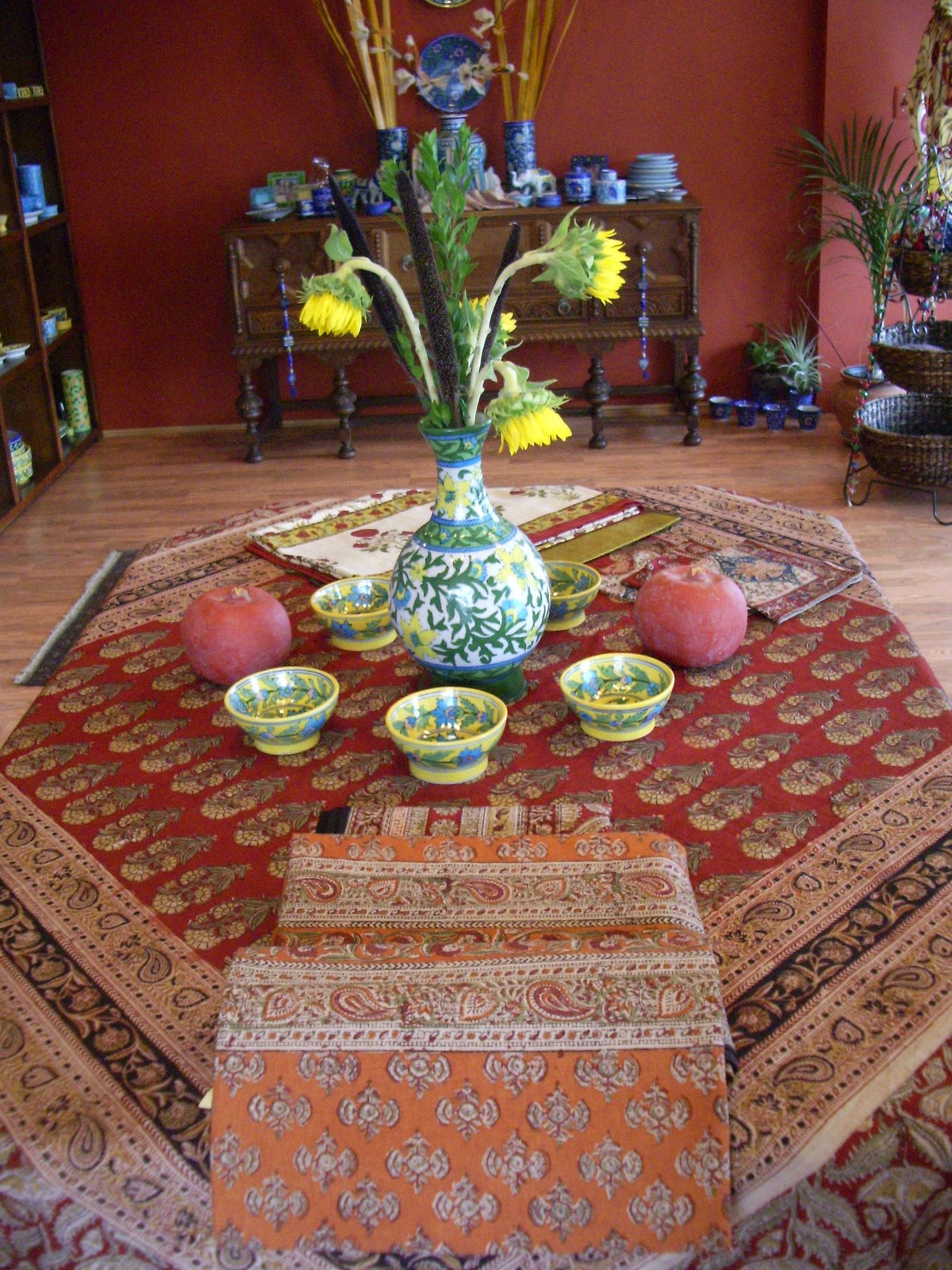
Block printed textiles from Pomegranates,
featured with Jaipur blue pottery
Visit the photo essay on Jaipur blue pottery making on esamskrati
Other sources for Indian block printed textiles include FabIndia (mentioned previously), Anokhi, and Pomegranates, a store located in Warrenton, Virginia, outside of Washington, DC. Wendy, who owns Pomegranates, sources her bedding and curtain panels directly from India; in addition, she sells select items from John Robshaw (including crib sets) and select apparel from Anokhi.
Peter Dunham is an LA-based interior designer who also sources blockprinted textiles from India. See his work for Jennifer Garner’s home in the fall/winter 2007 issue of Vogue Living.
Links for Kerry Cassill, John Robshaw, and FabIndia may be found on our Textiles page. Links for Les Indiennes, Anokhi, Pomegranates, and Peter Dunham may be found via My Web.


 Cold Cream 'n' Roses