The keffiyeh controversy returns


Rachel Ray for Dunkin’ Donuts

I know that my last several articles have veered away from discussing beauty, which has been my stock in trade, but timely topics such as Yves St. Laurent’s death and Barack Obama’s clinching the Democratic nomination for President have pre-empted blogging about beauty.

Last Saturday, I came back from Copenhagen, where only one Starbuck’s was spotted (in the airport) and Dunkin’ Donuts is non-existent. I came back to learn about the controversy concerning an ad for Dunkin’ Donuts, in which spokesperson Rachel Ray wore a fringed scarf suggesting the keffiyeh, which is closely associated with the late Palestinian terrorist Yasser Arafat.

The campaign was driven by conservative blogger Michelle Malkin and the strongly pro-Israel blog Little Green Footballs. Dunkin’ Donuts has since pulled the ad, thanks to Ms. Malkin and LGF and their thousands of followers. However, other conservative writers think that Ms. Malkin and LGF are reading into the adthings that really weren’t intended.

In Copenhagen, street fashion includes scarves, even keffiyehs, loosely worn around the neck. No wonder that dELiA*s called their version the “Euro scarf.” I don’t know if the kids have any knowledge about the keffiyeh and its associations and are merely buying into radical chic. It would help if there were a campaign to inform people about the terrorist attacks guided by Arafat and to prod them into questioning if they can justify wearing an item so closely associated with a terrorist.

Yves St. Laurent’s perennial style

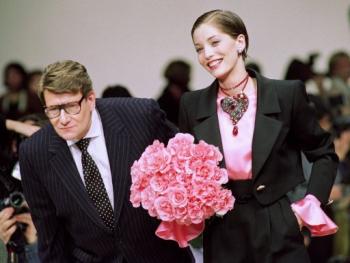
By now, everyone knows that Yves St. Laurent died Sunday, June 1.


Yves St. Laurent in 1993

I do not consider myself a fashionista (which is why I don’t blog often on fashion), but IMHO Yves St. Laurent and Coco Chanel are the most influential fashion designers of the past century. I make that judgment in view of the way that their styles have trickled down to what the Brits would call high street fashion and have become perennials (the word “classics” somehow suggests museum relics).

Chanel introduced skirt and dress suits, jersey knits, and the LBD (the little black dress for those of us who are not fashionistas) to women. Yves St. Laurent feminized menswear such as bush jackets (La Saharienne), tuxedo jackets, pea coats, and matched jacket and pants. Those styles are with us still.

Sometimes, high fashion is best restricted to Vogue and the runways. The styles of Yves St. Laurent and Coco Chanel found mass appeal.

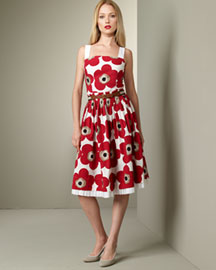
D&G Dolce & Gabbana rips off Marimekko Unikko print

The print on this D&G Dolce & Gabbana Poppy-Print Dress looks exactly like Marimekko’s famed Unikko print! No word if Marimekko granted a license to D&G Dolce & Gabbana to use this print.

Marimekko granted a license to H+M to use some of its prints for a recent limited edition collection. In the fall, Avon will debut a limited edition cosmetics collection using the Unikko print under license from Marimekko.

Found through Bergdorf Goodman.

UPDATE: The Glam Guide told me that D&G Dolce & Gabbana did indeed rip off Marimekko’s Unikko print. Read her comments and follow the links to read about her campaign to alert Marimekko and retailers selling D&G Dolce & Gabbana and Charles by Charles David shoes that these two brands were stealing the Unikko print. Thanks, G.G., for the info and for introducing me to your blog!

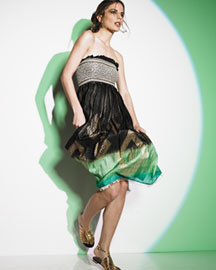
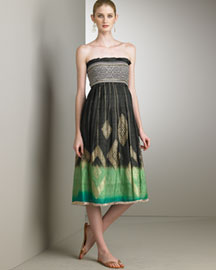
Diane von Furstenburg Gazara Foil-Print Silk Dress

I love ethnic prints. This Diane von Fustenburg strapless dress features gold tribal designs printed over a dip-dyed skirt in black and green. The jackard bodice features ruffles and gold beading. Great details that make a whole.

I definitely prefer the Giuseppe Zanotti sandals (top) to the flip-flops (bottom). Flip-flops are too casual.

Cosmetics bags

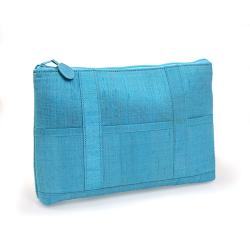
I collect cosmetics bags. I haven’t used them yet; the bags are lined up in my closet. Here are some selections from World of Good, which promotes fair trade handicrafts from around the world. You might have seen World of Good kiosks at Whole Foods Market or Wegman’s.

silk Come Full Circle Cosmetic Bag from Cambodia


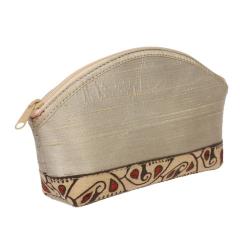
silk Udder Joy Pouch from India

The trim on this pouch is characteristic of the Indian decorative art of kalamkari, where artisans sketch designs with burnt tamarind twigs and then paint the designs with natural dyes.

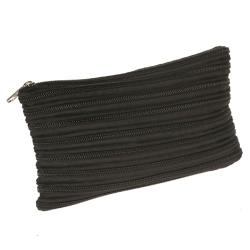
Hipper Zipper Pouch from Brazil

This pouch is actually made out of leftover zippers! While I wouldn’t put the silk pouches in my handbag for fear of getting them dirty, this bag is rugged enough for my handbag.

Cocoon Wrap

It’s been an uncommonly cool day here in the DC area, with a high in the low fifties (Fahrenheit) and overcast skies. A kind of day where you’d want to wrap yourself in something warm and take a nap.

I rely on blankets, but this cocoon wrap from Italy’s Loro Piana in cashmere/silk would be a luxe ($790.00!) option, but as SWAV notes, “too rich for my blood.”

I particularly like the free form style with open sleeves. Found through Bergdorf Goodman.

Zulugrass

With this being the first day of March, the signs of spring are upon us. Daylight savings time begins next Sunday, spring officially starts with the vernal equinox on March 20, and Easter Sunday is March 23. Spring means that it’s coming time to lighten up your wardrobe and makeup.

The fashion magazines say that safari looks will be big this year. For me, safari looks are a perennial. In addition to the bush jacket-inspired looks, I enjoy wearing necklaces and other accessories made of wood, horn, seeds, and other natural elements. I have several pieces by Zulugrass, which features beads that are cut from grass and dyed. In particular, I love the subtle gradations of color to be found in Zulugrass pieces.

Philip and Katy Leakey founded Zulugrass to provide work for Maasai women in Kenya during a severe drought that forced their men to travel longer distances to graze their cattle. Recently, Kenya has been afflicted by civil unrest and violence in the wake of presidential elections. After I bought my latest Zulugrass piece, I wrote to the company and asked if their workers had been adversely affected by the recent civil unrest and violence. I was told that Zulugrass artisans have not been directly affected by the violence; however, more and more people are seeking work through Zulugrass, given that tourism has plummeted due to prospective tourists’ fear of violence. I was then asked if I would like to interview Katy by phone while she was in the United States.

Katy and I discussed the founding of Zulugrass. Her husband Philip is a scion of the storied Leakey family that has done pioneering research into the forerunners of homo sapiens. Katy said that Philip has an intimate and all-encompassing knowledge of the flora and fauna of the Rift Valley in Kenya and that he had the idea for fashioning jewelry from grass. Katy, an artist and designer, designed the first pieces of Zulugrass – grass beads and crystal beads strung on elastic bands. These strands can be combined and worn in many different ways. Philip and Katy then set up mobile work stations where the women, who are experts at beading, can string the jewelry.

The Leakey Collection has expanded to included wood and even porcelain fired and shaped by the Maasai women. In addition to necklaces, bracelets, and other accessories, The Leakey Collection is now marketing decorative trims for the home.

I asked Katy how the rest of us can support their efforts to create work opportunities for the Maasai. Buy the products. You may find stores and websites that sell Zulugrass via its website. You may occasionally find Zulugrass from authorized vendors on eBay. The company is seeking additional vendors to broaden its markets and create opportunities for more people. If you are a vendor or know someone who would be interested in selling Zulugrass and related products, you are invited to contact the company.

In addition, revive tourism in Kenya. The places in the Rift Valley where tourists go were not affected by the recent violence. Moreover, violence had subsided while talks between political rivals were underway (they have since come to a power-sharing agreement). The dropoff in tourism has had a cascading effect through the rest of the economy.