Belegenza Extraordinary Hair Care


Belegenza Extraordinary Hair Care
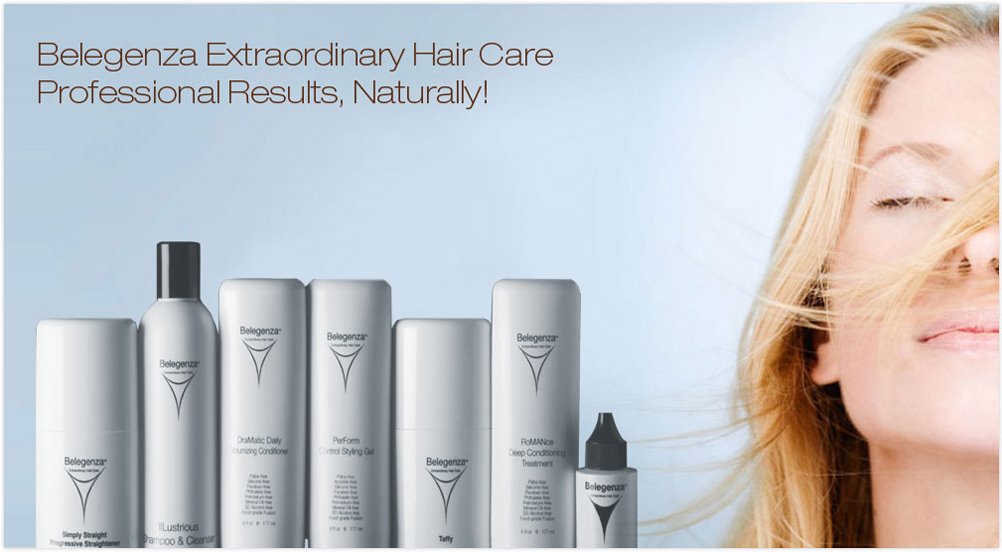
advertises its products as silicone-free, paraben-free, phthalate-free, sulfate-free, mineral oil-free, petrolatum-free, and urea-free. Its web site focuses on silicone, particularly its occlusive properties, in conventional hair products. Belegenza argues that silicone “suffocates” the scalp and has published testimonials from customers who claimed that their hair began growing out by using its products. See my article on silicones.

When I try products described as natural and organic, I want to find out if they work as well as conventional products. To compare, I checked the labels of shampoos and conditioners from L’Oreal and Joico. L’Oreal and Joico had some silicones and parabens, and if there were oils, the oils were plant oils.

Styling products, particularly pomades, often contain petrolatum. I don’t use styling products. My hairdresser is obsessive about the hair cut and eschews styling products, which he calls “glue.”

Ingredient lists aside, how well do Belegenza products perform? I tried GrowOut Shampoo and Strengthener, EnCore Leave-in Conditioner, and RoMANce Deep Conditioning Treatment. The shampoo is milder than conventional shampoos, so I do “rinse and repeat.” I apply RoMANce Deep Conditioning Treatment and cover my hair with a shower cap while I’m shaving or soaking in the tub. I use the EnCore Leave-in Conditioner, when I’m pressed for time.

Am I dreaming, or is it real, that my hair is bouncier and looks more voluminous after using Belegenza? Whatever, I like the results and I’ll continue using Belegenza products.

Silicones

In planning stories about Belegenza Extraordinary Hair Care and LivingProof No Frizz hair products, it became evident that I should address the use of silicones in hair and cosmetics products.

What are the characteristics of silicones?

In her ingredient dictionary, Paula Begoun describes silicone in this way:

… The unique fluid properties of silicone give it a great deal of slip, and in its various forms it can feel like silk on the skin, impart emolliency, and be a water-binding agent that holds up well, even when skin becomes wet.

Silicones 101, an article from the Coarse Hair Diary blog, notes that silicones build up on the hair and prevent moisture from entering. Dimethicone, an article from Christopher Drummond’s blog, notes the occlusive (barrier-forming) properties of dimethicone, which is a type of silicone. Essortment, in its article, How to control frizz in curly hair, notes that silicone seals hair.

Silicones give face primers their slip, and I’ve become a believer in face primers. Unlike Christopher and some people who have commented on his article, I have not have problems with breakouts. I suspect that’s because I apply primer to my cheeks, which are not prone to breakouts.

On the other hand, silicones have not worked for me in preventing frizz, which is a problem for me in DC’s humid climate. In addition, silicones weigh my hair down, no matter how little I use. Some say that using silicones leads to hair loss. I’ve been experiencing hair loss, but I don’t know if silicones are to blame: maybe it’s “The Change.” (I don’t know whether to laugh or cry)

Both Belegenza and LivingProof No Frizz are formulated without silicones. In articles planned for next week, I’ll review products from these brands.

Hair and the clash of cultures

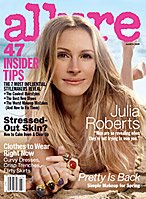
March 2009 issue of Allure

The March 2009 issue of Allure features an article The Locks Market about the global trade in human hair to make wigs and hair extensions. It focuses on the Tirumala temple in India, where Hindu women have their hair shorn as a gesture of humility and thankfulness.

Tirumala

The article describes the process that the hair undergoes from being shorn to being made into extensions. The hair changes hands from temple auctions to Indian hair brokers who sell it to Indian factories that sort, clean, and fumigate hair, which in turn sell it to wig and extension makers in Italy or Tunisia. Then the finished products are sold to distributors all around the world.

We gave our hair to God, Tirupati, Andhra Pradesh, India credit: weblogtheworld.com

It’s a fascinating read, but it’s only part of the story. Orthodox Jewish women often cover their heads with a wig. A rabbinical ruling forbade the purchase and wearing of wigs from hair that came from Hindu temples such as Tirumala, which are regarded as polytheistic and idolatrous. These rulings also apply to getting rid of the wigs – one cannot sell them, as it only perpetuates the trade. When Orthodox Jewish women in New York discovered that the human hair in their wigs came from Hindu temples, they destroyed the wigs by burning them.

This article is cross-posted at Mera Bharat Mahan.

Now Nick Arrojo has his own hair care line

I’ve already written that I skip the first half hour of TLC’s What Not to Wear (Stacy irritates me) to watch Carmindy and Nick Arrojo work their magic in the last half hour. Now Nick Arrojo has used his fame to start up an eponymous hair care line Arrojo, which is available at the tony Space NK boutique.

As for Carmindy, she has partnered with Sally Hansen for the Natural Beauty Inspired by Carmindy color cosmetics line. In my review, I wrote, “I suspect, however, that Natural Beauty Inspired By Carmindy will last only as long as TLC’s What Not to Wear is shown on TV.”

Now I’m more pessimistic. Only one of the various CVS stores that I visit in Northern Virginia carries Carmindy’s line, and there it’s hidden away from Revlon, L’Oreal, Maybelline, etc., right by nail care products. Hello! It might be Sally Hansen, but it’s not nail care!

The competition for shelf space and placement is intense, and clearly Natural Beauty Inspired By Carmindy has lost out. It’s only a matter of time before Natural Beauty Inspired By Carmindy disappears.

The fun Gus is having with you

“But Gus the gardener’s left now and you went with him, too
The fungus there reminds me of the fun Gus is having with you” – Garden of Love

Could a breakthrough in treating dandruff be far off? Scientists at P&G Complete Genome Sequence of Fungus Responsible for Dandruff, Skin Disorders (a really gross picture of the fungus Malassezia globosa may be seen by selecting this link).

The opening paragraph from this Reuters article Dandruff’s genes sequenced is graphic enough:

First, researchers grew enough fungus to give dandruff to 10 million people. Next, they sequenced its genes. Then they found out that not only does an icky fungus live on your head and cause dandruff– but it could be having sex. On your head. Right now.

This fungus had been discovered to reproduce sexually. According to the article, 10 liters of this fungus is enough for 10 million people.

Ojon Restorative Hair Treatment

Ojon says that its Restorative Hair Treatment can be used leave-in conditioner, shine enhancer, and moisturizer. I like to use to get rid of flyaways and to groom my eyebrows (I then apply a dark eyeshadow like Sonia Kashuk’s eyeshadow in Night or ModelCo ColourBox Eye Shadow Ibiza 13 on my brows).

You can feel good about using Ojon, because Ojon has created thousands of jobs for indigenous people who harvest palm nut oil from the Ojon tree, which grows only in Central America. As it’s made of palm oil (one of nature’s most saturated oils), it congeals. The fragrance reminds me of pipe tobacco, but I happen to like it.

You can find Ojon Restorative Hair Treatment 5 oz at Sephora.