5 Biggest Black Beauty Myths

Featuring advice from MUA @AshuntaSheriff.

See the 5 black beauty myths you have to read to believe

5 Biggest Black Beauty Myths

This is a TotalBeauty.com African-American hairstyles article
From not needing sunscreen to not being able to pull off blonde hair, African-American women get a lot of bad beauty messages. To put an end to the lies that are still being told, we talked to beauty experts and asked them to debunk the biggest African-American beauty myths. Finally, the truth is here.

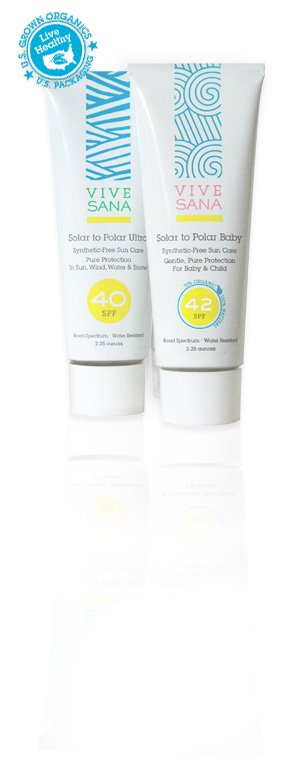
Vivesana organic sun care

Vivesana Suncare

Vivesana calls itself “the planet’s first 100% natural, 70% organic high performance and baby sunscreen.” It seeks to blend safe, sustainable ingredients with style.

Vivesana provides:

* the first 70% organic baby and high performance sun care on the market.
* the first 100% natural sun care with strong protection SPF (40 & 42)
* the first sun care – as far as it knows – to use exclusively US-grown organics and domestic, sustainable, BPA-free packaging.

Its products include Solar to Polar Baby and Solar to Polar Ultra sunscreens.

It’s no surprise that the active ingredients in Vivesana sun care were titanium dioxide and zinc oxide minerals, both barrier sunscreens. Plant oils and extracts are “carrier” ingredients.

Be prepared: Vivesana sunscreens are as thick as ointment. Its sunscreens are packaged in metal squeeze tubes, which are less common, as companies move to plastic squeeze tubes.

Some might not like the thick consistency and the white cover that Vivesana provides. However, for those people who have sensitive skin and/or who want an organic, natural product that performs and has style, then Vivesana is a very good choice.

Developments in sunscreen technology

Cosmetics Design Europe is a great resource for developments in cosmetics formulation. Here are three recent articles concerning sunscreen technologies:

SymHelios® 1031
According to the linked article, SymHelios® 1031 prevents a protein called the Aryl Hydrocarbon Receptor (AhR) from inducing long term skin damage. UVB rays are said to cause the amino acid tryptophan to form a toxin that binds with AhR to induce the negative effects of exposure to UVB rays. SymHelios® 1031 is not a UV filter and should not take the place of UV filters.

SymHelios® 1031 was developed by the German company Symrise AG. I could not find any evidence that the FDA has approved SymHelios® 1031. Nor do I know of any products containing SymHelios® 1031. If there are independent studies that support or refute Symrise’s claims, please tell me about them.

Solastay S1
Specialty chemicals company Hallstar has launched a new photostabilizer called Solastay S1. Hallstar claims that Solastay S1 enables Octyl methocycinnamate (OMC), a UVB absorber, and Avobenzone, a UVA absorber, to be combined. OMC and Avobenzone are unstable together.

If there are independent studies that support or refute the claims for Hallstar’s claims, please tell me about them.

Nanoparticles
Nanoparticles are one of the most controversial topics in cosmetics formulation. Due to the efforts of the Environmental Working Group and companies marketing natural and organic products, consumers have become scared about the use of nanoparticles in cosmetics. However, NANODERM, a project that involves twelve European universities and institutes, has shown that nanoparticles of titanium dioxide, an active ingredient used in mineral sunblock, do not penetrate the skin. Watch this video featuring Professor Tilman Butz of the University of Leipzig (Germany), who led the NANODERM project.

Mineral sunscreens, such as titanium dioxide and zinc oxide, can look ashen, particularly on deeper skin tones. Micronized titanium dioxide minimizes the ashen appearance.

Want more? Cosmeticsdesign.com has a special edition on sunscreens.

Sunscreen ingredients

You know about the need to wear sunscreen. You know about the need for a sunscreen that protects you from both UVA and UVB rays. But are you confused about sunscreen ingredients and how they work? What about proprietary names, such as Helioplex (Neutrogena), and trademarked ingredients, such as Meroxyl FX (L’Oreal) and Parsol® 1789?

dermatology.about.com answers these questions and more. Heather Brannon, MD is the “guide” for dermatology.about.com. While Dr. Brannon is not a dermatologist (she is a family practice doctor), she has a definite interest in dermatologic topics.

Dr. Brannon’s article Proper Use of Sunscreen describes the various kinds of ultraviolet radiations and classifies sunscreen ingredients as either physical barriers (for example, titanium oxide) or radiation absorbers, in addition to discussing appropriate application of sunscreen. Her article Sunscreen Information – Information About UVA Sunscreen Ingredients describes various UVA radiation absorbers, including Helioplex, Meroxyl FX, and Parsol® 1789.

Given the importance of wearing sunscreen, these two articles are must-reads.

In a subsequent article, I will mention recent innovations in sunscreen technology.

Illuminare

After Ruthie Malloy of Illuminare Cosmetics wrote to me concerning my article on Mineral Madness, I was curious to try her products. I sent off for the 3 Foundation Formulas in 3 Middle Shades – Introductory Pack of 9, All Day Eye Color Trial Kit, and the Fast Application Pad.


Top: 3 Foundation Formulas in 3 Middle Shades – Introductory Pack of 9
Bottom: All Day Eye Color Trial Kit

Illuminare is described as ‘liquid mineral makeup.” The selling point is that these products are rated SPF 21. The sunscreen is provided by minerals such as titanium oxide and zinc oxide that provide a physical barrier to solar rays.

Actually, the consistency is thicker than liquid – it’s more like cream. Illuminare is certainly the most opaque makeup that I’ve ever used, but that’s the point, as it provides a physical sunscreen. It will take me time to get used to the coverage. I used the Portofino Porcelain shade for my light complexion, applying it with the flocked Fast Application Pad.

I found the Latte eye color shade too light for me, but Cafe Latte was great as an eye shadow base. Precision is needed to use the middle shades in the crease – you’ll want to use brushes here. I found the middle shades too dark for the crease. One can mix these shades with Latte, Perla Blanca, or Perla Rossa to lighten them. Nonetheless, I wish that Illuminare would create shade variations between Cafe Latte and the middle shades for the crease.

My favorite Illuminare eye color is Espresso, as it’s the sort of brown-black I like for creating the smoky eye look; moreover, it creates a thick line. I’ll be a repeat customer for this one.

Two consumer items for cosmetics users

Cosmetics Products Get a Makeover – A new international standard provides guidelines for the detection and identification of candida albicans, which can contaminate cosmetics while in production. Yes, candida, the nasty little fungus responsible for yeast infections. However, there is no reason for alarm: most cosmetics are safe to use.

FDA Proposes New Rule for Sunscreen Products – The Food and Drug Administration (U.S.) has proposed rules for rating UVA in a sunscreen and labeling sunscreens. SPF covers protection from UVB rays only. In addition, the FDA proposes this warning label on sunscreens:”UV exposure from the sun increases the risk of skin cancer, premature skin aging, and other skin damage. It is important to decrease UV exposure by limiting time in the sun, wearing protective clothing, and using a sunscreen.

The FDA is accepting comments on the proposed rules until November 26, 2007. You may submit comments to FDA referencing Docket No. 1978N-0038.