Rethinking Mally Beauty

After a recent spate of presentations by Mally Roncal on QVC, I began to rethink my opinions about Mally Beauty. I still like the packaging of Mally Beauty products and the beautiful shades of Mally’s Shimmer, Shape & Glow Face System, but the pressed powders are so hard, it’s difficult to pick up color on a brush. I have to scrape powder with my fingernail to pick up color on my brush.

Also, some of Mally’s products outrageously priced. A 4.0 oz bottle of dual-phase eye remover for $25, when you can buy dual-phase eye makeup removers from Neutrogena or Boots Botanicals for less than $10, with more product? A waxy brow pencil for $25, when Revlon ColorStay Brow Enhancer, a comparable product, costs less than $10?

If Mally would reformulate the Mally’s Shimmer, Shape & Glow Face System, I’d be a repeat customer. I’ll pass on the Eye-Opening Brow Boost and Dual Action Makeup Remover.

Vivesana organic sun care

Vivesana Suncare

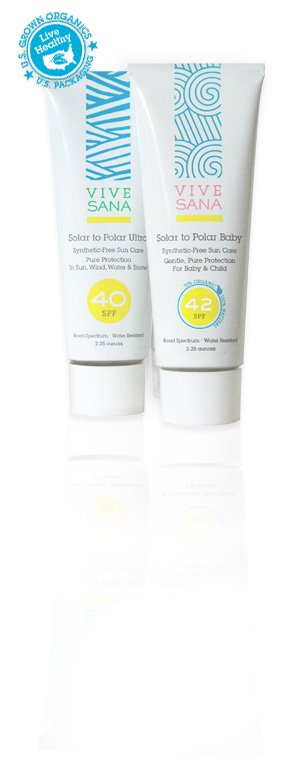
Vivesana calls itself “the planet’s first 100% natural, 70% organic high performance and baby sunscreen.” It seeks to blend safe, sustainable ingredients with style.

Vivesana provides:

* the first 70% organic baby and high performance sun care on the market.
* the first 100% natural sun care with strong protection SPF (40 & 42)
* the first sun care – as far as it knows – to use exclusively US-grown organics and domestic, sustainable, BPA-free packaging.

Its products include Solar to Polar Baby and Solar to Polar Ultra sunscreens.

It’s no surprise that the active ingredients in Vivesana sun care were titanium dioxide and zinc oxide minerals, both barrier sunscreens. Plant oils and extracts are “carrier” ingredients.

Be prepared: Vivesana sunscreens are as thick as ointment. Its sunscreens are packaged in metal squeeze tubes, which are less common, as companies move to plastic squeeze tubes.

Some might not like the thick consistency and the white cover that Vivesana provides. However, for those people who have sensitive skin and/or who want an organic, natural product that performs and has style, then Vivesana is a very good choice.

Developments in sunscreen technology

Cosmetics Design Europe is a great resource for developments in cosmetics formulation. Here are three recent articles concerning sunscreen technologies:

SymHelios® 1031
According to the linked article, SymHelios® 1031 prevents a protein called the Aryl Hydrocarbon Receptor (AhR) from inducing long term skin damage. UVB rays are said to cause the amino acid tryptophan to form a toxin that binds with AhR to induce the negative effects of exposure to UVB rays. SymHelios® 1031 is not a UV filter and should not take the place of UV filters.

SymHelios® 1031 was developed by the German company Symrise AG. I could not find any evidence that the FDA has approved SymHelios® 1031. Nor do I know of any products containing SymHelios® 1031. If there are independent studies that support or refute Symrise’s claims, please tell me about them.

Solastay S1
Specialty chemicals company Hallstar has launched a new photostabilizer called Solastay S1. Hallstar claims that Solastay S1 enables Octyl methocycinnamate (OMC), a UVB absorber, and Avobenzone, a UVA absorber, to be combined. OMC and Avobenzone are unstable together.

If there are independent studies that support or refute the claims for Hallstar’s claims, please tell me about them.

Nanoparticles
Nanoparticles are one of the most controversial topics in cosmetics formulation. Due to the efforts of the Environmental Working Group and companies marketing natural and organic products, consumers have become scared about the use of nanoparticles in cosmetics. However, NANODERM, a project that involves twelve European universities and institutes, has shown that nanoparticles of titanium dioxide, an active ingredient used in mineral sunblock, do not penetrate the skin. Watch this video featuring Professor Tilman Butz of the University of Leipzig (Germany), who led the NANODERM project.

Mineral sunscreens, such as titanium dioxide and zinc oxide, can look ashen, particularly on deeper skin tones. Micronized titanium dioxide minimizes the ashen appearance.

Want more? Cosmeticsdesign.com has a special edition on sunscreens.

P&G to pull Max Factor from the U.S.

I was stunned – and saddened – to learn that P&G is discontinuing sale of Max Factor in the U.S.

Stunned, because P&G seemed to be investing so much into the brand, by hiring Gisele to be the face of Max Factor and heavily promoting its Extreme Lash Plumper and Vivid Impact Lipstick (which I think is very good), particularly through TotalBeauty.

Saddened, because we are losing a truly iconic brand. I do not use the term iconic lightly – it’s overused.

Business is business, however. P&G is pulling Max Factor from the U.S. because of poor sales. It’s probably the same reason that distribution of Max Factor was limited to Wal-Mart and a few other outlets (Ulta), but not to the Big Three of drugstore chains: CVS, Walgreen’s, and Rite-Aid.

I agree with SF Beauty Examiner Mira Torres that tastes have changed. Women no longer want the full coverage of Pan-Stik and Pan-Face. Then, as Ms. Torres rightly points out,

Max Factor’s downfall may be that it tried to stay “hollywood glamour,” even if the term “Hollywood” (with the train-wreck tabloids and and reality world mayhem) has become kind of a joke.


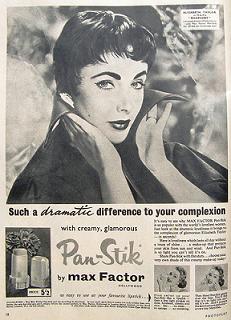
As for me, I had to reproduce this image of Elizabeth Taylor advertising Pan-Stik that graced Ms. Torres’s article:

Elizabeth Taylor for Max Factor’s Pan-Stik

This is Liz from the 50s: pixie cut; dramatic, arched eyebrows, and painted lips. Now many, including my husband, might see Elizabeth Taylor as the ultimate train-wreck (multiple marriages, her friendship with Michael Jackson), but she’s kept people fascinated for well over 60 years: no mean feat.

If anyone epitomized the “Hollywood Glamour” that Max Factor promoted, it’s Liz.

Sunscreen ingredients

You know about the need to wear sunscreen. You know about the need for a sunscreen that protects you from both UVA and UVB rays. But are you confused about sunscreen ingredients and how they work? What about proprietary names, such as Helioplex (Neutrogena), and trademarked ingredients, such as Meroxyl FX (L’Oreal) and Parsol® 1789?

dermatology.about.com answers these questions and more. Heather Brannon, MD is the “guide” for dermatology.about.com. While Dr. Brannon is not a dermatologist (she is a family practice doctor), she has a definite interest in dermatologic topics.

Dr. Brannon’s article Proper Use of Sunscreen describes the various kinds of ultraviolet radiations and classifies sunscreen ingredients as either physical barriers (for example, titanium oxide) or radiation absorbers, in addition to discussing appropriate application of sunscreen. Her article Sunscreen Information – Information About UVA Sunscreen Ingredients describes various UVA radiation absorbers, including Helioplex, Meroxyl FX, and Parsol® 1789.

Given the importance of wearing sunscreen, these two articles are must-reads.

In a subsequent article, I will mention recent innovations in sunscreen technology.

How to wear bright eyeshadow

Who doesn’t like makeovers and before and afters? Here’s a step-by-step tutorial on how to wear bright eyeshadow:

TotalBeauty.com
Real-Woman Tutorial: How to Wear Bright Eyeshadow

Yes, you can wear teal shadow without looking garish — just follow these steps

Real-Woman Tutorial: How to Wear Bright Eyeshadow

This tutorial is designed to show you step-by-step how to wear bright colored eyeshadow (which is doable even if you have small or Asian eyes). Brightly colored eyes can dress up a look when paired with a neutral or nude face, or accessorize an entire outfit. Just make sure you know how to wear it before rocking it in the office.

See how-to

For my part, I think that Asians and women with deeper skintones wear bright eyeshadows better than their lighter complexioned sisters.

Living Proof No Frizz hair care

The Washington, DC metro area is infamous for its humid weather: I’m surprised that TotalBeauty didn’t name Washington, DC among its 13 Worst Hair Cities.

In humid weather, my hair frizzes and becomes unmanageable. I’ve tried traditional silicone-based products, such as John Frieda’s Frizz Ease® serum, but silicone-based products weigh down my hair and don’t provide significant relief from frizz.

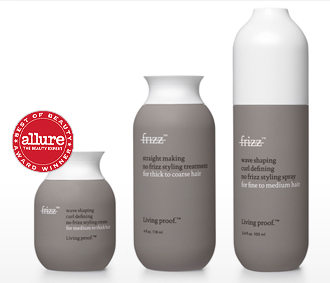
I received some LivingProof NoFrizz hair care products, which are silicone-free. NoFrizz did the trick where silicone-based products failed. My hair stays smooth in humid weather.


LivingProof NoFrizz hair products

How do No Frizz products work? The Beauty Brains (my favorite source for evaluating beauty claims, along with Paula Begoun) write,

Living Proof uses a type of chemical known as a PolyfluoroEster (or PFE for short) to smooth the hair shaft and prevent moisture from being absorbed. … But PFEs (which are Teflon-like compounds) are VERY good at lowering surface tension, and so in theory they could provide the three main benefits [frizz prevention, dirt repellancy, and shine and color enhancement] that Living Proof claims on their website …

Read more from The Beauty Brains article Are Living Proof No Frizz Products Good For Curly Hair? Also read the review Living Proof NO-FRIZZ Keeps Frizz From Frazzling You! (love that title) by Advice Sister Alison.

You may find Living Proof No Frizz hair products at Sephora stores and Sephora.com.

Belegenza Extraordinary Hair Care


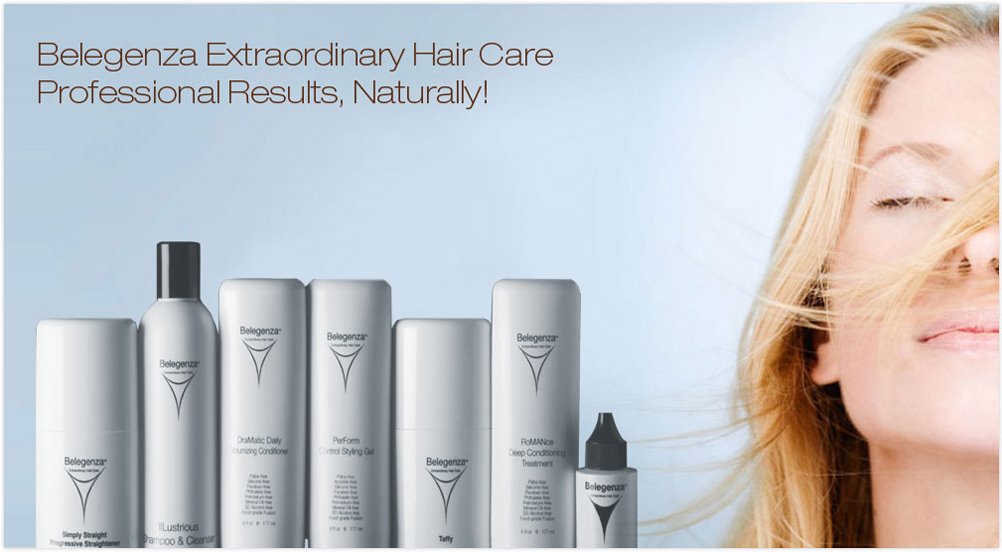
Belegenza Extraordinary Hair Care
advertises its products as silicone-free, paraben-free, phthalate-free, sulfate-free, mineral oil-free, petrolatum-free, and urea-free. Its web site focuses on silicone, particularly its occlusive properties, in conventional hair products. Belegenza argues that silicone “suffocates” the scalp and has published testimonials from customers who claimed that their hair began growing out by using its products. See my article on silicones.

When I try products described as natural and organic, I want to find out if they work as well as conventional products. To compare, I checked the labels of shampoos and conditioners from L’Oreal and Joico. L’Oreal and Joico had some silicones and parabens, and if there were oils, the oils were plant oils.

Styling products, particularly pomades, often contain petrolatum. I don’t use styling products. My hairdresser is obsessive about the hair cut and eschews styling products, which he calls “glue.”

Ingredient lists aside, how well do Belegenza products perform? I tried GrowOut Shampoo and Strengthener, EnCore Leave-in Conditioner, and RoMANce Deep Conditioning Treatment. The shampoo is milder than conventional shampoos, so I do “rinse and repeat.” I apply RoMANce Deep Conditioning Treatment and cover my hair with a shower cap while I’m shaving or soaking in the tub. I use the EnCore Leave-in Conditioner, when I’m pressed for time.

Am I dreaming, or is it real, that my hair is bouncier and looks more voluminous after using Belegenza? Whatever, I like the results and I’ll continue using Belegenza products.

TotalBeauty.com
Get Your Best Lashes and Lips

Readers and Bloggers share their favorite tricks for playing up our flirtiest features

Get Your Best Lashes and Lips

Oh, those eyes! Those lips! Keep all eyes fixed on your gorgeous face with these alluring tips and tricks from TotalBeauty.com’s glam-savvy readers and bloggers.

See tricks

TotalBeauty bloggers provide tips on lips and eyes in conjunction with “sneak peak” reviews of MAX Factor Vivid Impact Lipcolor and MAX Factor 2000 Calorie Extreme Lash Plumper Mascara.